
Flatwork That Handles Load and Weather
Concrete Services in Missoula for properties needing durable driveways, patios, or foundation slabs that resist cracking
Concrete driveways that develop spiderweb cracking within a few years, patios that settle unevenly and pool water, or foundation slabs poured without proper base preparation fail because shortcuts were taken during installation. JaKoby Construction handles concrete work in Missoula with attention to grading, base compaction, and finishing techniques that prevent the common failure patterns seen when installers rush the process or skip steps. The work produces surfaces that drain correctly, support vehicle weight without cracking, and cure to full strength before exposure to traffic or freeze-thaw stress.
Proper concrete installation starts below the surface—grading ensures positive drainage away from structures, compacted base material prevents settling, and rebar or wire mesh reinforcement controls crack propagation. Mix design matters in Montana's climate, where freeze-thaw cycles demand air entrainment and appropriate water-cement ratios to prevent surface scaling and internal deterioration. Finishing techniques affect both appearance and durability, with trowel timing and curing methods determining whether the surface develops a dense, wear-resistant finish or a weak, chalky top layer.
Request a site evaluation to review grading requirements and base conditions before concrete placement.
What Changes After Concrete Installation
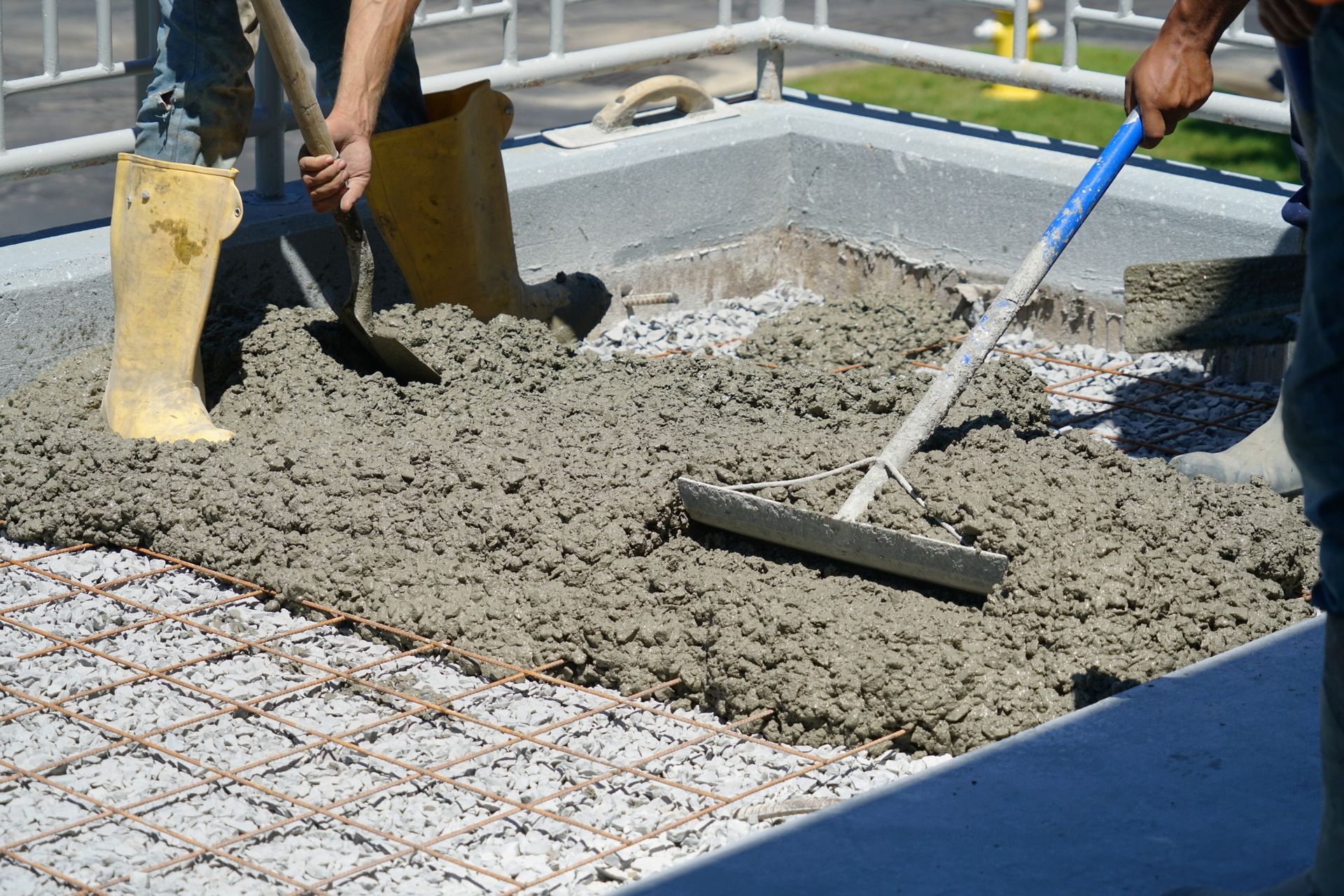
The process involves excavation to proper depth, base material placement and compaction, edge form installation, and concrete placement with controlled slump and finish. Control joints are cut or formed at planned intervals to direct cracking to designated locations rather than letting it develop randomly across the surface. Proper curing—keeping the concrete moist for several days after placement—allows the chemical reaction to complete and prevents premature drying that weakens the surface.
You'll notice that the finished surface slopes away from buildings so water doesn't pool against foundations, the texture provides traction without being rough enough to damage vehicle tires, and the concrete doesn't develop edge crumbling or surface flaking after the first winter. Driveways support vehicle weight without settling into ruts, patios remain level for furniture placement, and slabs provide a stable base for framing or equipment installation. The difference shows up in longevity—concrete that reaches 20 to 30 years without major repair versus surfaces that crack and spall within five.
Concrete work can include decorative finishes, colored mixes, or stamped patterns, but those additions don't affect structural performance. The foundation of durability is proper base preparation, correct mix design, and controlled curing, regardless of the final surface appearance.
Concrete projects involve decisions about thickness, reinforcement, and timing that directly affect how long the installation lasts.
Answers to Frequent Service Questions
What thickness is required for a residential driveway?
Four inches is standard for passenger vehicles, but six inches is recommended if the driveway will support trucks, RVs, or heavy equipment. Insufficient thickness leads to cracking under load, especially at the edges where support is minimal.
Why does concrete crack even when it's installed correctly?
Concrete naturally shrinks as it cures, and control joints are placed to direct that cracking to planned locations. Random cracking across the surface indicates problems with base preparation, improper curing, or missing reinforcement.
How long before you can drive on a new concrete driveway?
Light foot traffic is safe after 24 hours, but vehicle traffic should wait at least seven days to allow the concrete to reach sufficient strength. Full curing takes 28 days, though the surface is usable well before that.
What base material works best in Missoula?
Crushed gravel with fines compacts well and provides stable support that drains effectively. The base should be at least four inches thick and compacted in lifts to prevent settling after the concrete is poured.
Can concrete be poured in cold weather?
Yes, but it requires additional precautions like heated water in the mix, insulated blankets during curing, and protection from freezing temperatures for at least 48 hours after placement. Cold-weather pours cost more due to these extra steps.
JaKoby Construction provides concrete quotes that specify mix design, reinforcement type, and curing methods so you understand what's included and why each step matters. Reach out to discuss your project's scope and timeline based on current weather and site conditions.