
Outdoor Spaces Built for Daily Use
Deck Construction in Missoula for properties where usable outdoor space is limited or existing decks show structural wear
When your property lacks functional outdoor living space or an existing deck has become unsafe due to rot, loose railings, or failing ledger connections, deck construction creates a stable platform designed for Montana's seasonal extremes. JaKoby Construction builds custom decks in Missoula using wood or composite materials selected for durability in freeze-thaw cycles and UV exposure. The result is a structure that handles foot traffic, furniture weight, and weather exposure without developing the bounce, splinters, or decay that signal premature failure.
The process begins with site evaluation to determine appropriate footing depth below frost line, drainage considerations, and how the deck will attach to the existing structure. Montana's frost depth requirements mean footings must extend below the freeze line to prevent heaving, and proper ledger board attachment prevents the separation that causes most deck collapses. Material selection depends on your priorities—pressure-treated lumber offers lower upfront cost, while composite decking eliminates the seasonal maintenance and reduces moisture-related expansion and contraction.
Arrange an on-site consultation to review layout options and material choices based on your property's slope and intended use.
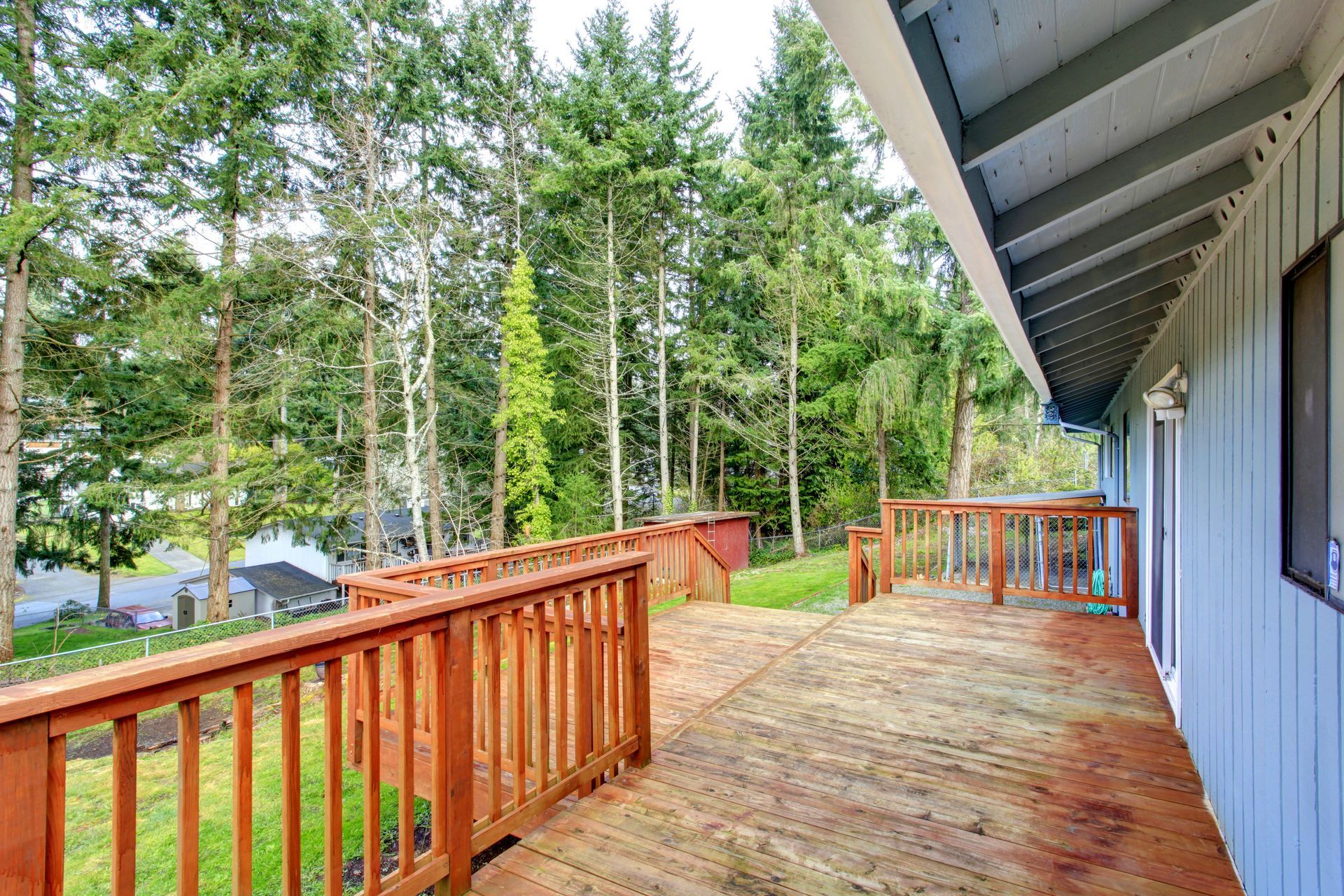
How Deck Construction Addresses Durability Needs
Construction starts with excavation and concrete footings set below frost depth, followed by post installation and beam placement. Joists are spaced according to decking material specifications—composite often requires tighter joist spacing than wood—and all fasteners are rated for exterior exposure and compatible with the lumber treatment chemicals. Ledger boards receive through-bolted connections into solid framing, not just siding or sheathing, and flashing prevents moisture intrusion at the house connection point.
Once construction is complete, you'll notice that the deck feels stable underfoot without flex or bounce, railings are solid when you lean against them, and the surface sheds water without puddling. Composite surfaces won't develop splinters or require annual staining, and properly spaced boards allow debris to fall through rather than collecting between gaps. The structure remains level over seasonal ground movement because footings were placed correctly from the start.
Deck projects can include built-in benches, privacy screens, or stair access to ground level, depending on how you'll use the space. Not every deck requires a permit, but structures above a certain height or attached to the home typically do, and compliance with local building codes is part of the construction process.
Deck projects involve decisions about materials, design, and long-term maintenance that affect both upfront cost and durability.
Common Questions About This Service
What's the advantage of composite decking over wood?
Composite eliminates the need for annual staining or sealing and resists moisture absorption that causes wood to warp, crack, or rot. It costs more initially but requires less maintenance over its lifespan, and it performs better in Montana's wet spring and dry summer cycles.
How deep do footings need to go in Missoula?
Footings must extend at least 36 inches below grade to sit below the frost line and prevent heaving during freeze-thaw cycles. Shallow footings shift as the ground freezes and thaws, causing the deck to move and fasteners to loosen.
Can you build a deck on sloped terrain?
Yes, decks can be built on slopes using taller posts and additional bracing. The design adjusts footing placement and post height to create a level platform, and stairs provide access to grade level where needed.
What's included in a typical deck project?
Construction includes footing excavation and concrete pours, post and beam installation, joist framing, decking installation, railing systems, and stair construction. Permits, material delivery, and site cleanup are also part of the process.
How long does a properly built deck last?
Pressure-treated wood decks typically last 15 to 25 years with regular maintenance, while composite decking can exceed 30 years with minimal upkeep. Lifespan depends on material quality, installation accuracy, and exposure to standing water or direct ground contact.
JaKoby Construction provides detailed deck estimates that break down material options, design considerations, and construction timelines so you can compare approaches. Contact us to discuss your property's layout and what outdoor space configuration works best for how you'll use it.