
Structure That Supports Everything Above It
Framing Services in Missoula for new construction and additions requiring precise, code-compliant structural work
Structural framing creates the skeleton that determines whether a building stands plumb, resists lateral loads, and supports finish materials without developing cracks or movement. When you're adding square footage to an existing home or starting a new build, framing accuracy affects every trade that follows—drywall, roofing, siding, and trim all depend on walls that are straight, corners that are square, and openings that match door and window dimensions. JaKoby Construction provides framing services in Missoura with attention to member sizing, connection details, and alignment that keeps projects moving without callbacks for out-of-plumb walls or sagging headers.
The work begins with layout—transferring foundation or slab dimensions to establish wall locations, verifying square and parallel relationships, and marking header heights and rough openings. Lumber is selected to match span tables and load requirements, with engineered joists or beams used where conventional framing won't meet the load or distance demands. Wall assemblies are built flat, squared, and tilted into place, then braced and aligned before sheathing locks everything into final position.
Contact us to discuss framing requirements and coordination with your project's foundation and finish timelines.
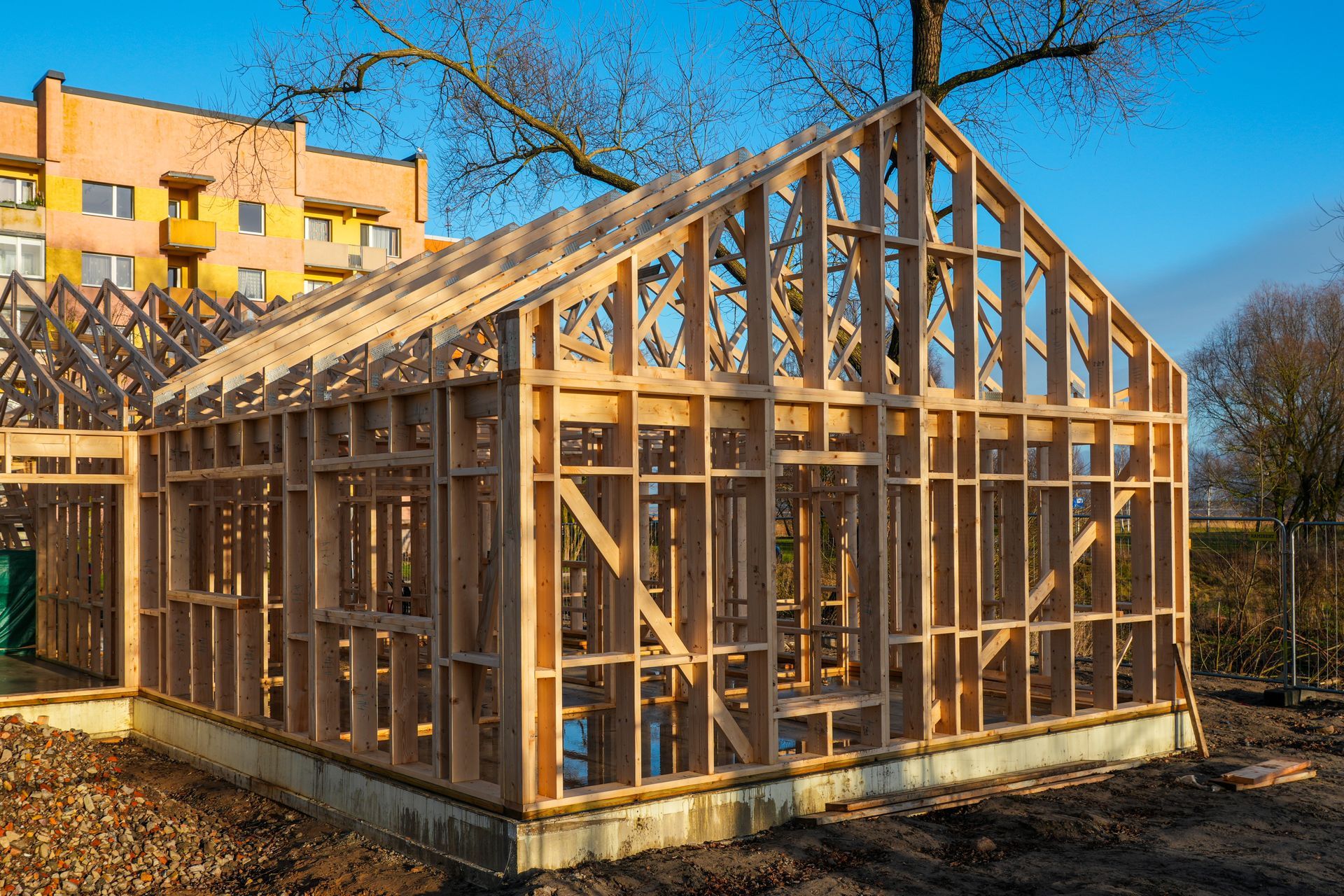
Why Framing Precision Works for Long-Lasting Buildings
Framing involves cutting studs, plates, and headers to precise lengths, assembling wall sections with correct nail patterns and spacing, and setting roof trusses or rafters according to engineering specifications. Openings for windows and doors are framed to exact rough opening dimensions so units fit without forcing or shimming excessively. Load paths are maintained from roof to foundation—every vertical and horizontal member transfers weight to the next component in line, and breaks in that path cause sagging or structural failure.
Once framing is complete and inspected, you'll notice that rooms match the dimensions shown on plans, walls don't bow or lean, and ceiling heights remain consistent across spans. Windows and doors install without gaps or binding, drywall hangs flat without waves, and roof lines run straight without dips or humps. The structure becomes the stable platform that allows insulation, mechanical systems, and finish work to proceed without fighting alignment issues caused by framing errors.
Framing projects require coordination with foundation contractors, inspectors, and the trades that follow. Sheathing, house wrap, and window installation often happen immediately after framing to protect the structure from weather exposure, and scheduling those phases efficiently keeps the project moving and reduces the risk of moisture damage to framing lumber.
Framing involves technical decisions about materials, methods, and sequencing that affect both cost and construction quality.
What Property Owners Usually Ask
What's the difference between conventional framing and engineered lumber?
Conventional framing uses solid-sawn lumber like 2x10 joists or 2x4 studs, while engineered lumber includes I-joists, LVL beams, and other manufactured products designed for longer spans and consistent performance. Engineered products cost more but eliminate problems like warping, twisting, and excessive deflection.
How do you ensure walls are plumb and square?
Walls are checked with levels during assembly, braced temporarily after tilting into place, and aligned using string lines before sheathing is applied. Once sheathing is nailed on, the assembly becomes rigid and holds its position through the rest of construction.
Can framing be done in winter in Missoula?
Yes, framing can proceed in cold weather as long as the foundation or slab is ready and the site is accessible. Snow and ice need to be cleared from work areas, and lumber should be kept dry to prevent moisture absorption that leads to warping during interior finishing.
What happens if framing dimensions are off?
Small errors can be corrected during finish work with shims and adjustments, but significant framing errors—like walls that are several inches out of plumb or openings that don't match window sizes—require rework that delays the project and increases costs.
How long does framing take for a typical addition?
A single-room addition may take one to two weeks to frame, including walls, roof structure, and sheathing. Larger projects or complex roof lines extend the timeline, and inspections are required before moving to the next phase.
JaKoby Construction coordinates framing work with project schedules and inspection requirements, providing accurate execution that keeps trades moving without delays caused by structural issues. Schedule a consultation to review your project's framing needs and how the work fits into your overall construction timeline.